By Nessa
Performing looks glamorous from the audience, doesn’t it? Lights, music, applause, dramatic pauses, maybe a glittery costume if the budget has allowed for more than one sequin. But behind all that, there’s a very practical question nobody talks about enough: what do you actually wear underneath it all when your body is working hard?
Whether you’re dancing, rehearsing, acting, singing, stretching, warming up, waiting around backstage or running between costume changes, your clothes need to do more than look good. They need to move with you, stay comfortable, support you properly and avoid becoming one more thing you have to think about.
Because when you’re performing, the last thing you want is leggings rolling down, a sports bra digging in, seams rubbing, or a top that suddenly decides it has had enough of staying in place.
Performance starts with movement
For performers, activewear is not just gym clothing. It is working clothing.
Rehearsals can involve hours of movement, repetition, sitting on studio floors, standing around waiting for notes, then suddenly launching into a full routine. Your outfit needs to handle all of that without fuss.
Good rehearsal clothing should let you stretch, bend, twist and breathe. It should not restrict your shoulders, dig into your waist, ride up every three seconds or make you feel self-conscious when you’re trying to focus.
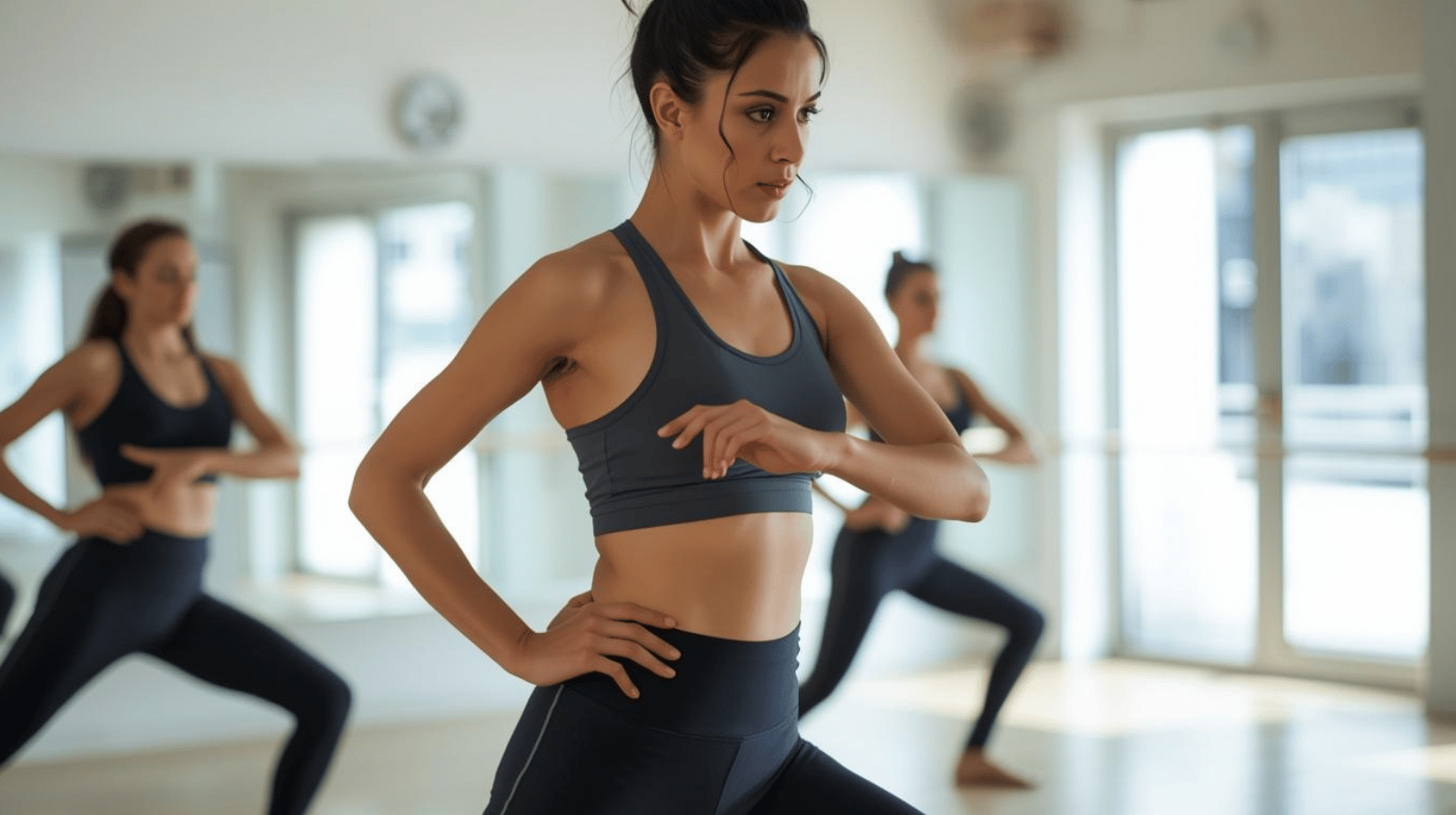
This is why so many performers lean towards leggings, fitted joggers, vest tops, crop tops, fitted T-shirts and lightweight layers. They allow the body to move while still letting teachers, choreographers or directors see posture, alignment and movement clearly.
Kara would like me to add that looking “a bit put together” also helps. Apparently turning up looking like you’ve been dragged through a laundry basket is not the motivational aesthetic she personally recommends.
I’m not saying she’s wrong. I’m just saying comfort comes first.
The best leggings for performers
Leggings are one of the most useful pieces of clothing for rehearsals, dance classes and movement work, but they need to be chosen carefully.
For performers, leggings should be squat-proof, flexible and secure at the waist. A high-waisted pair can be helpful because they are less likely to roll down during movement. A thicker fabric is usually better than something too thin, especially under bright studio lights.
The waistband matters more than people think. If it digs in, folds over or needs constant pulling up, it will distract you. You want leggings that stay put through warm-ups, floor work, choreography and long rehearsal days.
A good pair should feel supportive without feeling like you are being vacuum packed.
What about tops?
Tops for performers need to balance movement, coverage and breathability.
Loose tops can be comfortable, but they may get in the way during dance, acrobatics or physical theatre. Very tight tops can look neat, but if the fabric does not stretch properly, they can restrict the body.
A fitted vest, breathable T-shirt or longline crop top can work well, especially when layered with a hoodie, sweatshirt or wrap top for warming up and cooling down.
Layers are useful because rehearsal rooms are unpredictable little creatures. One minute you’re freezing, the next you’re sweating like you’ve just sprinted through a musical theatre finale.
Sports bras and support
This is where underwear becomes part of performance clothing rather than something separate.
If you have a bust, a supportive sports bra can make an enormous difference during dance, movement, running, jumping or long rehearsals. The right one should reduce bounce, feel secure and allow you to breathe properly.
For lower-impact work, a medium-support bra may be enough. For dance, musical theatre, circus, fitness-heavy performance or energetic rehearsals, a higher-support sports bra may be more comfortable.
The main thing is fit. If the band rides up, the straps dig in, the cups gape, or you feel compressed rather than supported, it is probably not the right one.
And please, do not save your proper support for “special occasions.” If your body is working hard, it deserves proper support every time.
Seamless underwear can be useful
For performers wearing fitted leggings, leotards, costumes or close-fitting rehearsal clothing, seamless underwear can be helpful. Not because visible lines are the end of the world — they are not — but because seams can sometimes rub, press or feel uncomfortable during movement.
Soft, breathable fabrics are usually best. Anything too tight, scratchy or decorative may look lovely in a drawer but become deeply annoying after two hours of choreography.
This is not about looking perfect. It is about not being distracted by your own pants halfway through rehearsal.
Comfort is a confidence issue
The right activewear does not magically make someone a better performer, but it can help remove distractions. When your clothes stay in place, support you properly and let you move freely, you can focus on the work.
That matters.
Performers already have enough to think about: lines, lyrics, timing, choreography, spacing, direction, nerves, notes, auditions and occasionally someone shouting “from the top” when everyone is already emotionally hanging by a thread.
Your clothing should make the job easier, not harder.
The performer’s simple checklist
Before buying or wearing activewear for performance, ask yourself:
Can I move freely in it?
Does it stay in place?
Does it feel breathable?
Does it support me properly?
Could I wear it for several hours?
Does it distract me?
If the answer to most of those is yes, you are on the right track.
Performers are brilliant at making difficult things look effortless. But behind that effortlessness is a lot of practical preparation, and clothing is part of that.
Good activewear, supportive underwear and comfortable layers can make rehearsals, auditions and performances feel that little bit easier.
You do not need the fanciest kit in the world. You do not need to look like you have walked out of a glossy campaign shoot. You just need clothes that support your body, suit your movement and let you get on with the job.
Because whether you’re in a studio, backstage, in class or heading into an audition, the best outfit is the one that lets you stop thinking about your outfit.